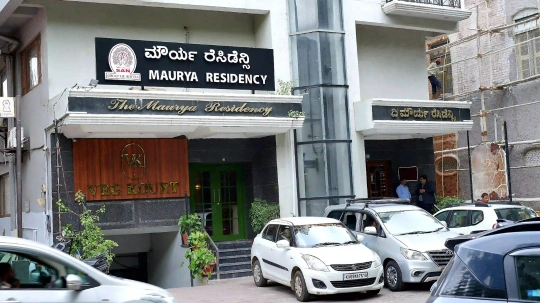
You’re on a booking page at eleven at night with two tabs open, and the only real difference between them is about ₹600 a night and one letter of the alphabet. That’s the choice between AC and Non-AC Hotel Rooms in Mysore, and it trips up more travellers than any other decision they make about the trip. Maurya Palace and Maurya Residency are options to compare as you decide what suits your stay.
The honest answer depends on when you’re visiting, how many hours you’ll actually spend in the room, and how well you sleep with a ceiling fan going. Mysuru’s climate is gentler than that of many Indian cities, which makes this a genuine judgement call rather than an automatic upgrade. Check the available room amenities and rates at Maurya Palace and Maurya Residency before booking.
Mysore sits at roughly 760 metres above sea level, and that altitude does a lot of quiet work. Evenings cool down properly here. Even in warmer months, a room with cross-ventilation and a working ceiling fan is often enough once the sun drops. Compare that with a coastal city where humidity never releases its grip, and you’ll see why AC and Non-AC Hotel Rooms in Mysore deserve real thought rather than a reflex click on the pricier option.
Afternoons in April and early May climb into the mid-thirties. If your plan involves walking the Palace grounds at two in the afternoon and returning for a rest before an evening at Brindavan Gardens, cooling isn’t indulgence. West-facing upper-floor rooms hold heat late into the night, so ask which direction the window faces.
The southwest monsoon knocks the temperature down and brings dampness instead. Daytime highs sit comfortably in the high twenties. This is where people misjudge things. A poorly ventilated fan room in July feels clammy by morning, and washed clothes refuse to dry. Most units run a dry mode that works as a dehumidifier, which genuinely helps during a week of steady rain.
This is Mysuru at its best. December and January nights slide to 15 degrees or lower. You’ll be reaching for a spare blanket, not a remote. Between the two categories, the cheaper one wins outright in this window.
Numbers help more than adjectives. These ranges are indicative and shift with location, season and booking lead time.
Room type | Off-season Mysore room price | Peak / Dasara range | Best suited to |
|---|---|---|---|
Non-AC double, budget | ₹700 – ₹1,200 | ₹1,400 – ₹2,200 | Solo travellers, winter stops |
AC double, budget | ₹1,200 – ₹1,900 | ₹2,200 – ₹3,500 | Summer trips, light sleepers |
Non-AC family room | ₹1,300 – ₹2,000 | ₹2,400 – ₹3,800 | Groups on a tight budget |
AC family / deluxe | ₹2,000 – ₹3,500 | ₹3,800 – ₹6,000 | Families with children or elders |
The gap between the two usually lands between ₹400 and ₹900 a night at the same property. Over three nights that’s a decent meal for four near the Palace.
Some travellers should stop deliberating and book the cooled option. If you arrive on an overnight bus and need to sleep through the middle of the day, the room has to be dark and cool or the sleep won’t come. Business visitors with afternoon calls fall into the same group.
Small children get restless in heat faster than adults, and grandparents often struggle in April. AC Rooms in Mysore make more sense for multi-generational groups because you can’t negotiate comfort across four tolerances. One person’s “it’s fine” is another’s sleepless night.
Central Mysuru is not quiet. Sayyaji Rao Road and the lanes around the KSRTC bus stand carry traffic well past midnight. A sealed, cooled room with the windows shut is quieter by a noticeable margin. You’re paying for silence as much as temperature.
Plenty of trips genuinely don’t need it. Arrive in late November for a two-night sightseeing run and you’ll be out of the room from eight in the morning until nine at night. You’re paying for a bed and a bathroom.
Non-AC Rooms in Mysore also tend to sit in better-located budget properties. The same money that buys a cooled room on the outskirts often buys a fan room ten minutes’ walk from the Palace. On a short trip, walking distance beats a thermostat.
A few honest downsides:
• Older buildings have small windows and weak airflow, so ventilation varies a lot between rooms.
• Ground-floor fan rooms near a main road collect both dust and noise.
• In a May heatwave, a fan room stays uncomfortable until well past ten at night.
Navaratri changes the maths entirely. Rates across all Hotel Rooms in Mysore rise sharply, sometimes doubling for the Jamboo Savari weekend, and availability dries up weeks ahead. During this stretch the real choice often isn’t between AC and Non-AC Hotel Rooms in Mysore, but between whatever is left and nothing.
Dasara falls in the pleasant post-monsoon window, so a fan room is usually comfortable. But you’ll walk far more than usual through heavy crowds, and returning to a cool room midday has real value. If the budget stretches, book early and take the cooled option.
Run through this before you pay for either category:
1. Ask whether the unit is a split or window type, and when it was last serviced. An old window unit can be louder than the traffic outside.
2. Confirm the property has power backup. A sealed room without a generator is just a hot box during an outage.
3. Check whether the rate includes taxes, since GST slabs shift the final Mysore room price at the upper end.
4. Ask about floor and window direction. East-facing rooms heat in the morning, west-facing in the evening.
5. For Budget Hotels in Mysore, verify hot water timings. Many run geysers only during fixed morning hours.
Book direct where you can and ask whether they’ll hold both categories for you. Many smaller properties will show you the fan room first and let you upgrade at the desk for the difference. That one question saves more than any coupon code.
Mid-week rates run noticeably softer than weekends, since a large share of visitors drive down from Bengaluru on Saturday morning and leave Sunday evening. Shifting your dates by two days can cut either tariff by a fifth, same rooms and same city.
Almost never. December nights in Mysuru drop to around 15 to 18 degrees, and most travellers end up asking for an extra blanket rather than switching anything on. A fan room saves several hundred rupees a night in this season without costing you any comfort at all.
Expect roughly ₹400 to ₹900 per night at the same budget or mid-range property. That gap widens during Dasara and long weekends, when demand pushes cooled rooms up faster. Always confirm whether the quoted rate includes taxes before comparing two options side by side.
Cooled rooms usually win for families, particularly between March and June, because children nap during the day and a hot afternoon room ruins that. Travelling in December or January, a larger fan room often gives better value than a cramped cooled one at the same rate.
Most do. Small and mid-sized properties across the city typically keep a mix of both categories on the same floor. Ask to see the room before confirming, especially in older buildings where ventilation and unit age vary considerably from one room to the next.
Choosing between AC and Non-AC Hotel Rooms in Mysore comes down to three questions: what month you’re travelling, how much time you’ll spend indoors, and whether anyone in your group is sensitive to heat. From October to February, a fan room may be comfortable for many travellers. In April, air conditioning can make a difference, especially for elderly guests or anyone who needs a cool afternoon rest. In the months between, ventilation and room location may matter as much as the AC.
Before booking, check which amenities are included and ask about the room’s features. Maurya Palace and Maurya Residency can help you compare options for your dates and group. Contact the team to ask about available rooms and plan a comfortable stay.
For room details, amenities and booking information, visit the Maurya Palace and Maurya Residency Instagram profile.