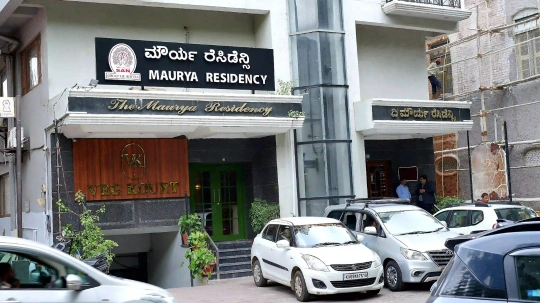
The first thing most visitors notice about Mysuru is that the hill is always there. You see it from the Palace, from the ring road, from the terrace of half the buildings in the city, lit up at night like a low green shoulder. Travellers who want that view with their morning coffee start searching for hotels near Chamundi Hills, and then discover the choice is less obvious than it looks. For travellers comparing their options, Maurya Palace and Maurya Residency can be a useful reference when considering location, convenience and the type of stay that suits their itinerary.
The hill rises about 1,000 metres above sea level, roughly 13 kilometres from the centre by road. Close enough to reach easily. Far enough that a stay near Chamundi Hills genuinely changes your day, your budget and how much quiet you get. Maurya Palace and Maurya Residency also give travellers another practical option to consider when planning a Mysuru stay around sightseeing and local travel.
Motorists start the climb near Nazarbad and work through a series of hairpins, passing the giant Nandi statue at the 700th step. The Chamundeshwari Temple, the Mahishasura statue and the main viewpoint sit at the summit. There is very little accommodation on the hill itself, since the summit is largely temple land, shops and parking.
So hotels near Chamundi Hills really mean the belt at the base and along its approach: Nazarbad, Lalitha Mahal Road, Siddhartha Layout, T. Narasipura Road and parts of Ramakrishna Nagar. These are leafier, lower-density areas with older bungalows, open compounds and far less horn noise than the market lanes.
Three reasons come up again and again, and they aren’t the same reason.
The temple gets busy from mid-morning, particularly on Fridays, Tuesdays and during Dasara. Pilgrims who want an unhurried darshan leave at 5.30 am. From the foothill belt that’s a fifteen-minute drive on empty roads. From the centre it’s thirty to forty minutes, half-awake.
Evenings on the eastern side of the city are noticeably calmer. You get birdsong instead of traffic, cooler air after dark, and a clear line of sight to the hill that photographs well without effort. Upper-floor rooms at a hotel near Chamundi Hills sometimes face the slope directly, worth asking about because listings rarely mention it.
Land is cheaper away from the core. The tariff that buys a compact room near the Palace often buys a larger one with a balcony at a hotel near Chamundi Hills, which matters if you’re travelling with parents or small children.
There’s no single right answer, and people comparing hotels near Chamundi Hills often skip this step. It depends on what your two or three days actually look like.
|
Option |
Time to temple |
Time to Palace |
Typical tariff (indicative) |
Suits |
|
Foothill belt (Nazarbad, Lalitha Mahal Rd) |
15–20 min |
10–15 min |
₹1,800–₹4,500 |
Pilgrims, families wanting quiet |
|
City centre |
30–40 min |
5–10 min walk |
₹1,500–₹4,000 |
Sightseeing-heavy trips |
|
Outer south (T. Narasipura Rd) |
20–25 min |
20–25 min |
₹1,200–₹3,000 |
Self-drive, longer stays |
|
Ring road belt |
25–35 min |
20–30 min |
₹1,500–₹3,500 |
Coorg or Bandipur onward trips |
Tariffs shift with season and how far ahead you book, so read them as a band rather than a rate card. During Dasara, expect every row to roughly double.
The climb is part of the experience, and how you do it affects where you should stay.
The stone stairway starts near the base on the eastern side and takes most reasonably fit adults 45 to 75 minutes. It’s shaded in parts, steep in others, and best attempted before 8 am. Monkeys are a genuine nuisance, so carry nothing loose and no visible food. Guests at hotels near Chamundi Hills can walk or take a short auto to the base of the steps, which is the practical advantage over staying across town.
City buses run to the summit through the day. Autos quote a return fare with waiting time, usually ₹450–₹700. If you’re driving, go early: summit parking fills by 9 am on weekends, and the hairpins get slow behind buses. Descending in the dark is manageable but unpleasant if you don’t know the road.
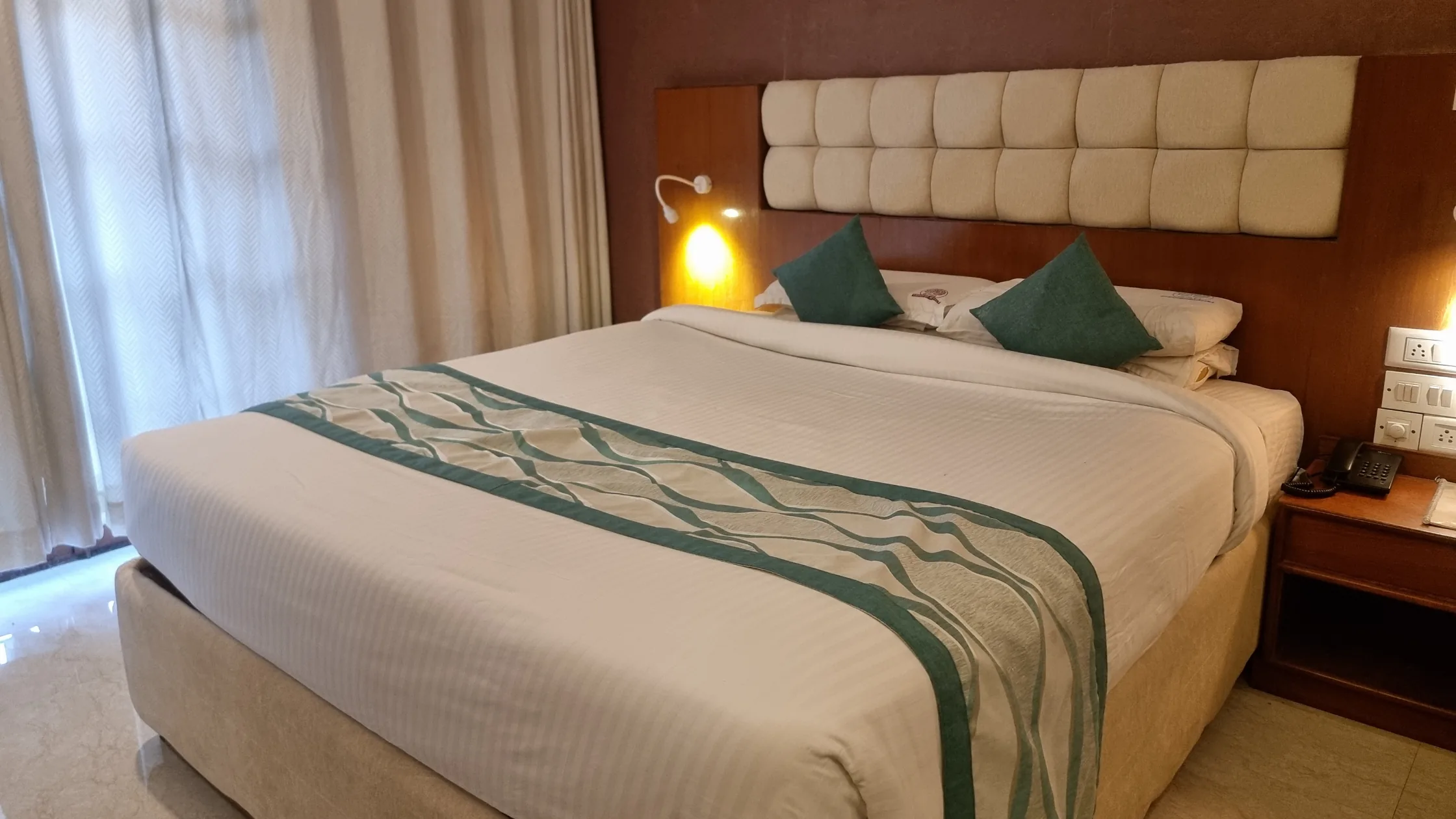
The foothill belt runs from simple lodges to comfortable mid-range properties, and most hotels near Chamundi Hills sit in that middle band. At the lower end, expect a clean double room, hot water in the morning, a fan or basic air conditioning and little else. For a two-night trip built around temple visits, that’s usually enough.
What to check before committing:
• Whether hot water is available at 5 am, not just from 7 onwards, which matters for early darshan.
• Whether the property has its own generator or inverter backup.
• Whether breakfast is served or you’ll need to find a darshini nearby.
• Whether the room faces the road, the compound or the slope.
• Whether parking is inside the gate or on the street.
Budget hotels in Mysore on this side of town tend to be family-run, which usually means flexible check-in and honest local advice, and sometimes fewer formal processes. Confirm by phone as well as online if you’re arriving before dawn.
Between November and February the weather is at its best: cool mornings, clear light, comfortable walking. That’s also when hotels near Chamundi Hills fill fastest. The monsoon months from June to September bring mist that can wipe out the view entirely, though the hill turns properly green and the steps get slippery. April and May are hot by Mysuru standards, but gentler than most of south India.
Dasara, usually late September or October, transforms everything. The temple sees enormous crowds, roads are managed with diversions, and tariffs across the best hotels in Mysore climb sharply. A stay near Chamundi Hills then gives you easier temple access but slower movement into the city.
Work through those six and you’ll avoid the two complaints that come up most often about hotels near Chamundi Hills: a “hill view” that turns out to face a compound wall, and a location that adds forty minutes to every city outing.
They work well if the temple is a priority or you want quiet evenings. First-timers focused mainly on the Palace, the zoo and Devaraja Market usually find a central base easier, since almost everything else clusters there and autos add up quickly across three days.
Roughly 12 to 14 kilometres by the ghat road from most foothill properties, which is a 15 to 20 minute drive outside peak hours. On Dasara days, Fridays and festival mornings, allow double that. The base of the walking steps is much closer, often within two or three kilometres.
Generally yes, and plenty of local residents do it daily from around 5.30 am. Go in a group if you can, wear proper shoes rather than sandals, and carry water. Keep bags zipped because of the monkeys, and avoid the descent after dark.
Not usually. Foothill tariffs often sit slightly below equivalent central rooms, and you tend to get more space for the money. Even the best hotels in Mysore on this side price reasonably outside festival season, though transport costs into town offset part of that saving.
The case for hotels near Chamundi Hills comes down to what you want your mornings to feel like. If that’s a 6 am drive up quiet hairpins for darshan and a view of the slope rather than a bus stand, the foothill belt beats anything in the city core. If your itinerary is Palace, market, zoo and back, the extra distance will wear on you by day two. Neither choice is wrong. Decide which one your trip is built around, then check the practical details before you pay.
If you’re weighing up hotels near Chamundi Hills for specific dates, Maurya Palace and Maurya Residency can help you compare your options and understand which type of stay may suit your plans. Contact Maurya Palace and Maurya Residency with your travel dates, number of guests and preferred room type for booking assistance.
Follow us on Instagram for Mysuru travel ideas, hotel updates, local attraction guides and useful tips for planning a comfortable stay.