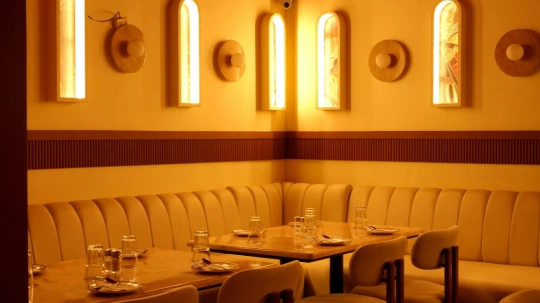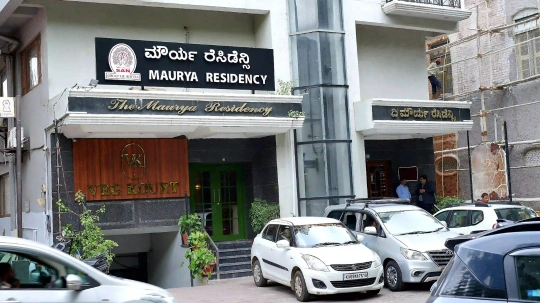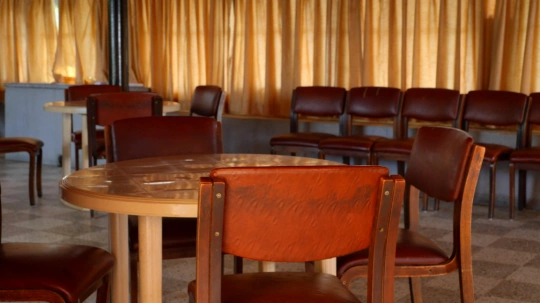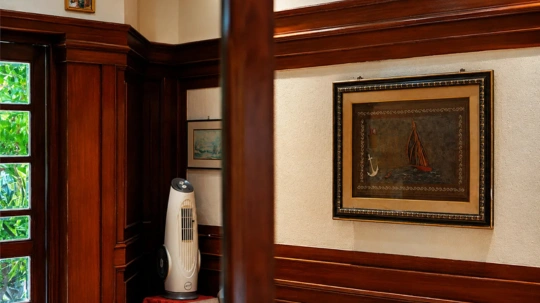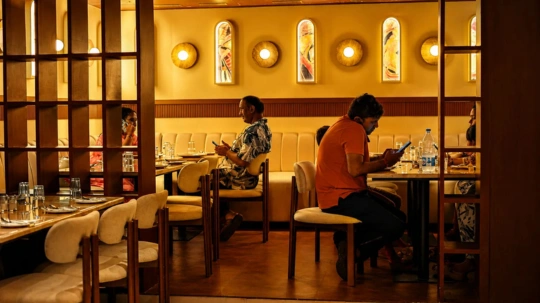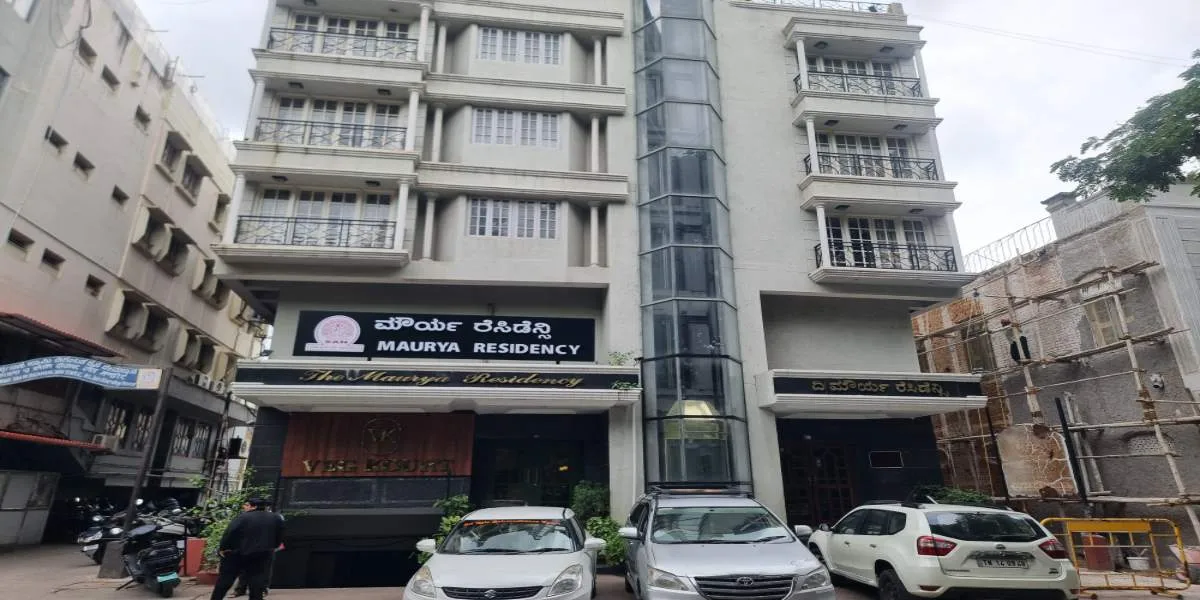
The photograph shows a bed, a window and a strip of sunlight. What it doesn’t show is whether the hot water runs after 9 am, whether the window opens onto a road, or whether the “deluxe” tag means anything beyond a slightly larger television. Most disappointments with Mysore hotel rooms come from that gap between the listing and the reality. Maurya Residency is an option for travellers who want to check these practical details before booking.
None of this is unique to Mysuru, but the city has its own patterns. Older buildings near the Palace, newer blocks towards the ring road, a big spread in what the same category name means from one property to the next. Knowing what to expect saves you from paying for something you assumed was included. For a stay where you can clarify room details before booking, consider Maurya Residency.
At the budget-to-mid range, the baseline across the city is fairly consistent. A double bed, an attached bathroom with a geyser, a ceiling fan, a television, and a bottle or two of drinking water. Housekeeping once a day. Wi-Fi that works well enough for messaging and patchily for video calls.
What varies is everything around that baseline. Some properties give you a kettle and complimentary tea, some charge for the second bottle of water, some include breakfast and some run a restaurant that opens at eight. Ask rather than assume, because none of it is standard.
Towels and bed linen are almost always provided. Toiletries beyond a soap bar often aren’t, at least below the mid-range brackets.
Category names are marketing, not measurement. Two properties on the same street can call very different rooms “deluxe”. Here’s the practical hierarchy.
The workhorse of the city. Usually the smallest room in the building, fan only, often on a lower floor. Perfectly comfortable from October through February, which covers a lot of the year in Mysuru.
Adds air conditioning and, usually, a slightly larger footprint and better fittings. In April and May this is worth the premium. In December it mostly isn’t.
An extra bed or a larger bed configuration, sometimes a sofa-cum-bed. These are the first to sell out on weekends and during school holidays, so book them early.
A separate sitting area, occasionally a small fridge. In budget and mid-range properties, the jump in price is often larger than the jump in usefulness.
|
Category |
Indicative tariff |
Typical size |
Worth it when |
|
Standard non-AC |
₹900 – ₹1,500 |
Compact |
Most months, short stays |
|
Deluxe AC |
₹1,600 – ₹2,600 |
Moderate |
April, May, light sleepers |
|
Triple / family |
₹1,900 – ₹3,200 |
Larger |
Three or four sharing |
|
Suite / executive |
₹3,000 – ₹5,000 |
Largest |
Longer stays, work trips |
Treat these as indicative bands. Actual tariffs move with season, location and how far ahead you book.
Below ₹900 you’re in lodge territory, where rooms in Mysore get small and the plumbing gets old. Between ₹1,000 and ₹2,000 sits most of the city’s clean, well-run mid-budget stock. For sheer value, the best hotel rooms in Mysore live in that band. Above ₹3,500 you’re paying for location, a pool, or a restaurant you may not use.
The Mysore room price you’re quoted also depends heavily on timing. A room at ₹1,400 on a Wednesday in July can be ₹2,600 on a Saturday in October. Dasara is a category of its own, when tariffs across the city climb sharply and stay there for ten days.
This is where budget Mysore hotel rooms differ most from each other, and where two rooms in Mysore at identical tariffs stop being comparable.
• Hot water timing. Many older properties run geysers or supply hot water only in the morning. Confirm if you prefer an evening shower.
• Western versus Indian toilet. Both are common. Listings don’t always specify.
• Water pressure. Upper floors in older buildings often lose pressure. Ask if it matters to you.
• Drinking water. Check whether refills are free or charged.
A quick call to the property answers all four in under two minutes, and it’s the single highest-value thing you can do before booking.
Central hotel rooms in Mysore sit in areas that get busy early. Devaraja Market wakes before six, temple loudspeakers carry, and the roads around the bus stand never fully quieten.
Which of the Mysore hotel rooms you’re assigned matters more than which property you chose. Rear-facing rooms and courtyard-facing rooms are usually the same tariff as road-facing ones, and dramatically quieter. Ask when you book, then confirm again at check-in. Upper floors get less traffic noise but more heat in summer, which is a genuine trade-off in April.
If the building has a lift, ask whether it runs through the night. Several older properties in the city centre switch theirs off after a certain hour.
Policies across Mysore hotel rooms vary more than people expect, and finding out at the desk at 11 pm is unpleasant.
Availability is seasonal here in a way that catches out first-time visitors. During Dasara, rooms available in Mysore drop to almost nothing within a few kilometres of the Palace, and what remains is expensive and often booked six to eight weeks out.
The other peaks are gentler. Long weekends pull traffic from Bengaluru, April and May bring family holidays, and Saturday nights carry a premium year-round. Midweek travel in June, July or late November gives you the widest choice of Mysore hotel rooms at the lowest rates, and you can often walk in and negotiate.
Monsoon is genuinely pleasant here. Rain comes in short bursts rather than all-day downpours, the gardens look their best, and the city is far less crowded. It’s also when the best hotel rooms in Mysore are easiest to get at their lowest published rates.
Sometimes, but it’s far from universal at the budget end. Mid-range properties more often include it. Check the rate description carefully, because a room ₹150 more with breakfast for two is usually the cheaper option once you’ve factored in a café stop each morning.
For most of the year, no. Mysuru sits high enough that evenings cool down and a ceiling fan does the job in most Mysore hotel rooms. April and May are the exception, when afternoon heat holds in the room past sunset. If you’re travelling then, or you sleep badly in warmth, take the AC room.
Six to eight weeks minimum, and two months is safer for anything central. Rooms available in Mysore during the festival disappear quickly, and late bookings mean either a long commute into the city each day or a tariff two to three times the normal rate.
For a clean, well-kept double with an attached bathroom, expect roughly ₹1,000 to ₹2,000 a night outside peak dates. That band covers most of the city’s reliable mid-budget stock. Weekends, long weekends and festival dates push it higher, sometimes considerably.
Booking Mysore hotel rooms well isn’t complicated. Work out whether you need AC for your dates, pick a category by how many of you are sharing rather than by the name on the listing, and spend two minutes on the phone asking about hot water, noise and extra-person charges. Mysore hotel rooms across the mid-budget range are generally good value, and the gap between a frustrating stay and a comfortable one usually comes down to those few questions rather than a few hundred rupees. Maurya Residency can be considered when comparing room options and checking these practical details.
If you’re unsure which category suits your group and your dates, a short conversation with an experienced local team will get you a clearer answer than another hour of comparing listings. For a suitable room option for your Mysore stay, explore Maurya Residency and choose the category that fits your group and dates.