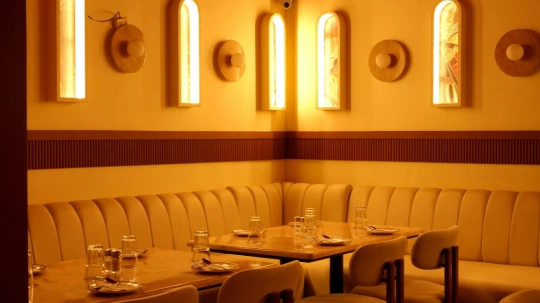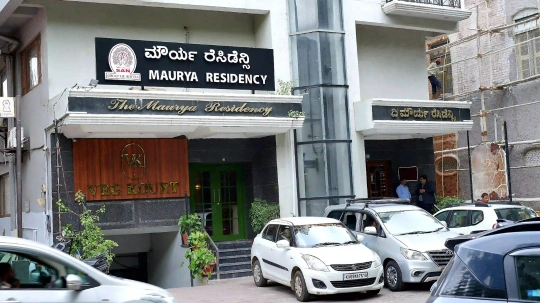
You get off the overnight train at Mysuru railway station around 6:40 am with a rucksack, a sleepy child and a plan to reach the Palace before the queues build. The difference between a ten-minute ride and a forty-minute crawl can decide your whole morning. That gap is the honest argument for Staying in Central Mysore, and it repeats itself every evening when everyone is tired and out of patience. For travellers comparing locations, Maurya Palace and Maurya Residency offers a convenient reference point when considering what matters in a central Mysore stay, while Staying in Central Mysore remains one of the simplest ways to reduce unnecessary travel during a short visit.
Mysuru is compact by Indian city standards, which fools visitors into assuming location barely matters. It matters more than the room tariff does. A central base changes how much you actually see in two days, what you spend on autos, and whether the trip feels unhurried or permanently behind schedule.
The centre is roughly the rectangle bounded by Sayyaji Rao Road, JLB Road, Irwin Road and the Palace compound, spilling into Devaraja Mohalla, Chamaraja Double Road and the edge of Nazarbad. Most of it sits within two and a half kilometres of the Palace north gate. That footprint is what staying in Central Mysore really means in practice.
Outside that ring you get Vijayanagar, Kuvempunagar, Hebbal and the stretches along Hunsur Road. Those areas are calmer and often newer, and plenty of good places to stay in Mysore sit there. They simply put a twenty to thirty minute buffer between you and everything you came to see.
Travellers underestimate this. Mysuru’s headline sights cluster tightly, and once you’re inside that cluster, you stop treating each outing as an expedition.
The Palace illumination on Sunday evenings and public holidays draws a serious crowd, and the roads around Nazarbad choke for an hour afterwards. If you’re walking back to your room, that congestion is somebody else’s problem. Guests choosing a central location can watch the lights, walk back and start dinner while others are still negotiating fares.
Devaraja Market is at its best between 7 and 9 am, when the flower sellers are stacking jasmine and the produce is fresh. That’s an easy pre-breakfast walk from the centre and a genuine chore from anywhere else. The same applies to the Jaganmohan Palace gallery, St Philomena’s Church and the silk shops on Sayyaji Rao Road.
Both arrival points sit in or near the centre. The KSRTC bus stand is a short hop from the Palace, and Mysuru railway station is around two kilometres away. Autos here are cheaper than in Bengaluru, but the meter is often a suggestion, and short rides get quoted at a flat minimum anyway.
|
From a central base |
Approx. distance |
Auto fare (indicative) |
|
Mysore Palace |
0.5–2 km |
₹40–₹80 |
|
Mysuru railway station |
1.5–3 km |
₹60–₹100 |
|
KSRTC bus stand |
1–2 km |
₹50–₹90 |
|
Mysuru Zoo |
2–4 km |
₹70–₹120 |
|
Chamundi Hill summit |
13–15 km |
₹450–₹700 return |
|
Brindavan Gardens |
20–22 km |
₹800–₹1,200 return |
Fares move with fuel prices and season, so treat these as a sense of scale rather than a quote. The pattern holds regardless. Four or five short rides a day from an outlying hotel can quietly add ₹400–₹600 to your daily spend, often more than the tariff you saved by staying in Central Mysore.
Trips fall apart on minor problems. A child develops a fever at 9 pm. Your charger dies. You want filter coffee at 7 am before a temple visit. In the centre, a chemist, an ATM, a darshini and an autostand sit within a few hundred metres, and the streets stay busy late enough that stepping out alone feels ordinary.
Dinner choice is the other quiet advantage of a central stay. Mylari-style dosa joints, old Udupi restaurants and market snack stalls are all reachable on foot. Hotels in Mysore on the outskirts often leave you eating in-house by default, which is fine for one night and tiresome by the third.
Staying in Central Mysore has real trade-offs, and pretending otherwise helps nobody.
Sayyaji Rao Road and the market lanes start moving before 6 am. Temple bells, delivery tempos, horns and, during festival weeks, amplified music are all part of it. Ask for a room facing the courtyard or the rear, and pack earplugs if you sleep lightly. Higher floors help more than you’d expect.
If you’ve driven from Bengaluru or Coimbatore, this is where a central base costs you. Older buildings in the core were not designed around cars, and street parking near the market is contested from mid-morning. Confirm covered or dedicated parking before you book rather than after you arrive.
Sightseeing time: the centre wins clearly. Expect three or four stops a day instead of two.
Daily transport cost: a central location can save roughly ₹300–₹600 a day for a family doing multiple outings.
Quiet and space: outskirts win. Kuvempunagar and the Ring Road belt are noticeably calmer.
Parking: outskirts win, usually with free open parking.
Room size and newness: outskirts often win at the same tariff.
Late-night food and chemists: the centre wins outright.
Dasara week: the centre is unbeatable for access, but priced and crowded accordingly.
Anyone whose itinerary is built around hotels near Mysore tourist attractions should lean central. Self-drive travellers using Mysuru as a base for Coorg or Wayanad are often better served further out.
For roughly ten days between late September and October, the city rearranges itself. Roads around the Palace close in phases, the Jamboo Savari route is barricaded, and diversions send you the long way around. A central room means walking to a vantage point instead of parking two kilometres away and hoping.
It also means paying two to three times the normal tariff and booking months ahead. Both things are true at once.
Before confirming a room, work through these six points:
Check the real walking distance to the Palace gate on a map, not the “prime location” claim in the listing.
Ask which side the room faces and whether the windows are double-glazed.
Confirm parking in writing if you’re driving.
Check the earliest check-in time, since many trains arrive before dawn.
Look at recent photographs rather than the header image, especially of bathrooms.
Ask whether breakfast starts by 7 am.
Mysore accommodation in this bracket is plentiful, so you can afford to be picky about these six points rather than settling on tariff alone.
Usually yes for a two or three night sightseeing trip. The premium is often ₹300–₹800 a night, while the savings on autos and the time you get back can exceed that. For longer stays or self-drive trips with parking needs, the case weakens.
Two full days cover the Palace, the zoo, Devaraja Market and Chamundi Hill at a comfortable pace. Three days lets you add Brindavan Gardens or Srirangapatna without rushing. One day is possible, but you’ll spend it moving between places rather than actually looking at them.
The central area is generally busy and well-lit until fairly late. Standard precautions still apply: pick a property on a main road, prefer somewhere with a staffed reception through the night, and use app-based cabs rather than street autos after dark.
Two to three months ahead, and earlier for the procession weekend. Rates rise steeply, minimum-night rules appear, and the best-located places to stay in Mysore fill first. If your dates are flexible, the week before the festival gives you the decorations without the crush.
The case for staying in Central Mysore comes down to what you want your days to feel like. If your itinerary is Palace, market, zoo, restaurants and short evening outings, a central base saves time, keeps transport simple and gives you more flexibility. If you are driving onward to Coorg or Wayanad and need easier parking, an outer area may suit you better. Neither choice is wrong. Decide which one your trip is built around, then check the practical details before you pay.
If you’re weighing up hotels in Central Mysore for specific dates, Maurya Palace and Maurya Residency can help you compare your options and understand which type of stay may suit your plans. Contact Maurya Palace and Maurya Residency with your travel dates, number of guests and preferred room type for booking assistance.
Follow us on Instagram for Mysuru travel ideas, hotel updates, local attraction guides and useful tips for planning a comfortable stay.